
Blueprint for Defiant Communities: Building Local Food, Power, and Healthcare Outside the System
The corporate stranglehold on our most basic needs: food, energy, and healthcare: has left millions of Americans vulnerable, dependent, and systematically exploited. While politicians debate and bureaucrats delay, communities across the nation are taking matters into their own hands, building parallel systems that prioritize people over profits.
This isn't about dropping out of society. This is about creating resilient alternatives that serve your neighbors when the dominant systems inevitably fail them.
1. Food Sovereignty: Reclaiming What Feeds Us
The Corporate Food System is Designed to Fail You
Industrial agriculture has transformed food from sustenance into commodity speculation. Three companies control 70% of the global seed market. Walmart and a handful of grocery chains dictate what reaches your shelves. Meanwhile, 23.5 million Americans live in food deserts where corporate chains find poor communities unprofitable.
Building Community Food Networks
Start with community gardens and urban farms on vacant lots, church grounds, or any available space. Detroit's urban farming movement transformed 1,400 empty lots into productive gardens after corporate divestment left residents stranded. These spaces become more than food sources: they're training grounds for agricultural knowledge and community organizing.
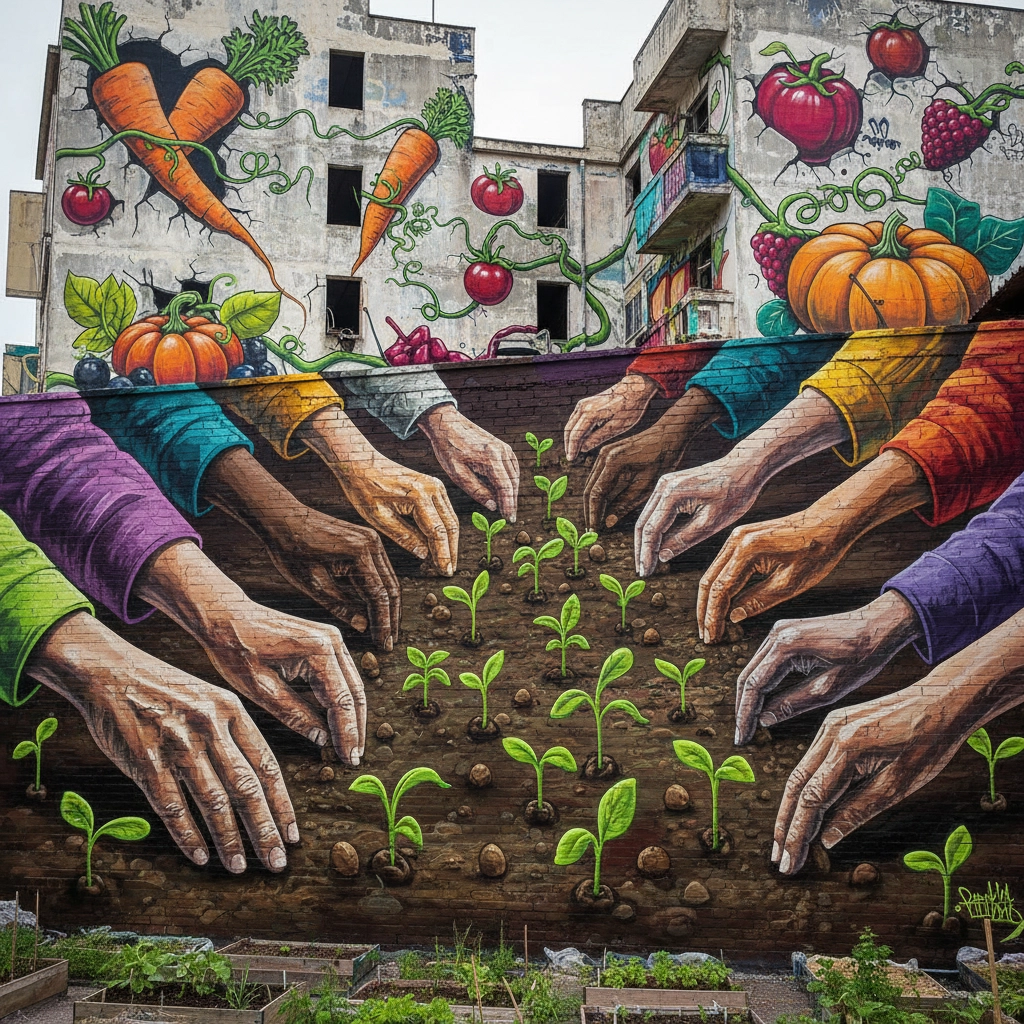
Seed libraries protect genetic diversity while building local food independence. Establish seed swaps at libraries, community centers, or farmers markets. Focus on heirloom varieties adapted to your local climate: varieties corporations abandoned because they can't be patented and controlled.
Food cooperatives bypass corporate grocery chains entirely. Pool resources to buy directly from local farmers, reducing costs while keeping money in your community. The Park Slope Food Coop in Brooklyn has operated successfully for 50 years, proving that community-controlled food distribution works.
Neighborhood buying clubs connect directly with regional farmers, cutting out corporate middlemen. Organize bulk purchases of staples: grains, beans, oils: from farmer cooperatives or regional distributors.
2. Energy Independence: Breaking the Utility Monopoly
Utilities Serve Shareholders, Not Communities
Electric utilities operate as legalized monopolies, guaranteed profits while communities face shutoffs, rate hikes, and infrastructure neglect. Meanwhile, these same companies spend millions lobbying against renewable energy that would reduce their control.
Community Solar Projects
Solar gardens allow neighborhoods to collectively own renewable energy infrastructure. Members buy shares in a community solar installation and receive credits on their electric bills. This model works even for renters and people who can't install rooftop panels.
Microgrids provide energy resilience when the corporate grid fails. Connect multiple buildings: homes, businesses, community centers: with shared solar panels and battery storage. During outages, the microgrid continues operating independently.
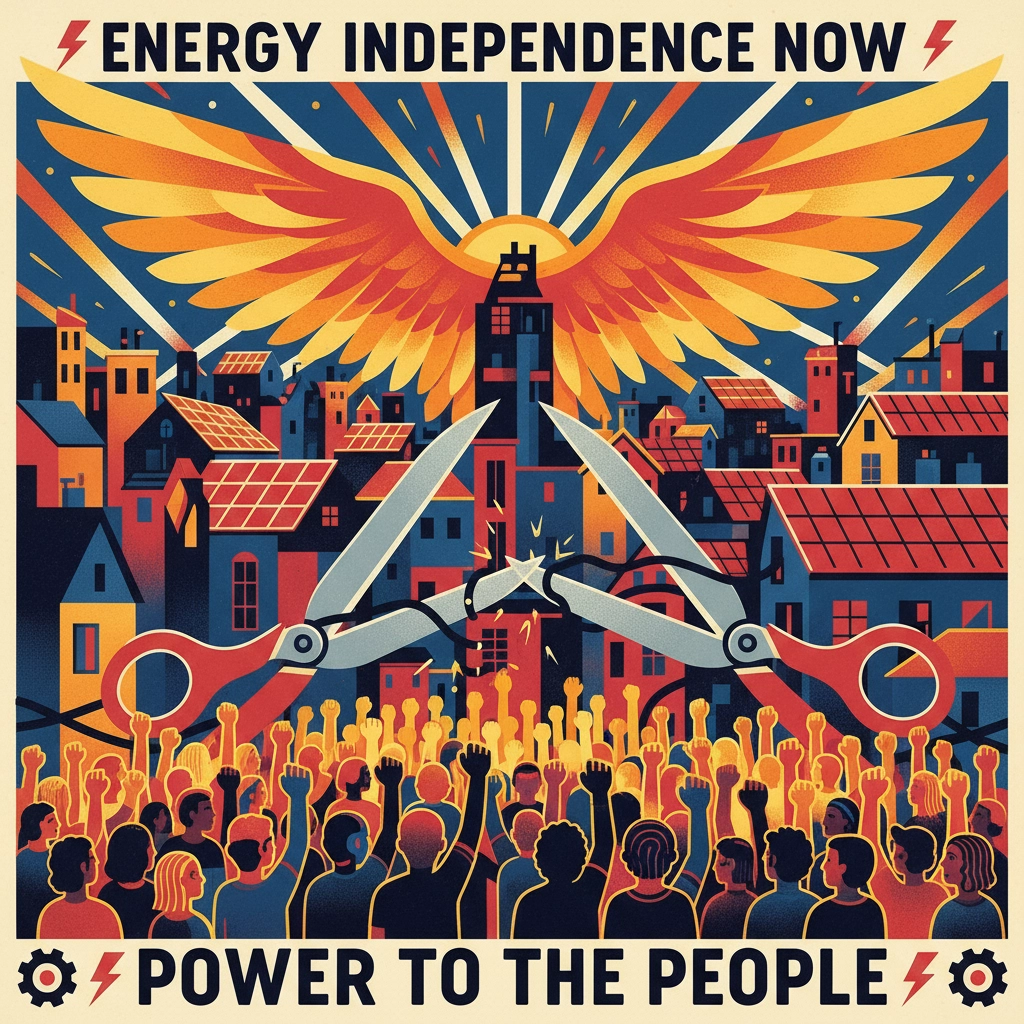
Energy efficiency cooperatives reduce overall demand through collective weatherization projects. Pool resources to buy insulation, efficient appliances, and heating systems in bulk. Train community members to perform basic energy audits and improvements.
Community-supported energy follows the same model as community-supported agriculture. Residents pay upfront for a share of renewable energy production, providing capital for solar installations while guaranteeing lower long-term energy costs.
3. Healthcare Outside Corporate Medicine
For-Profit Healthcare is Organized Abandonment
Healthcare corporations profit from sickness, not wellness. They've created artificial scarcity: limiting medical school enrollment, restricting practice licenses, and pricing treatments beyond reach. Meanwhile, medical debt drives 66% of personal bankruptcies.
Community Health Networks
Health circles bring together neighbors to share knowledge about nutrition, herbal medicine, and preventive care. These peer-support networks reduce isolation while building collective health knowledge outside corporate medical systems.
Community paramedic programs train residents in basic emergency care, blood pressure monitoring, and health screenings. When professional medical care is inaccessible or unaffordable, community members can provide crucial early intervention.
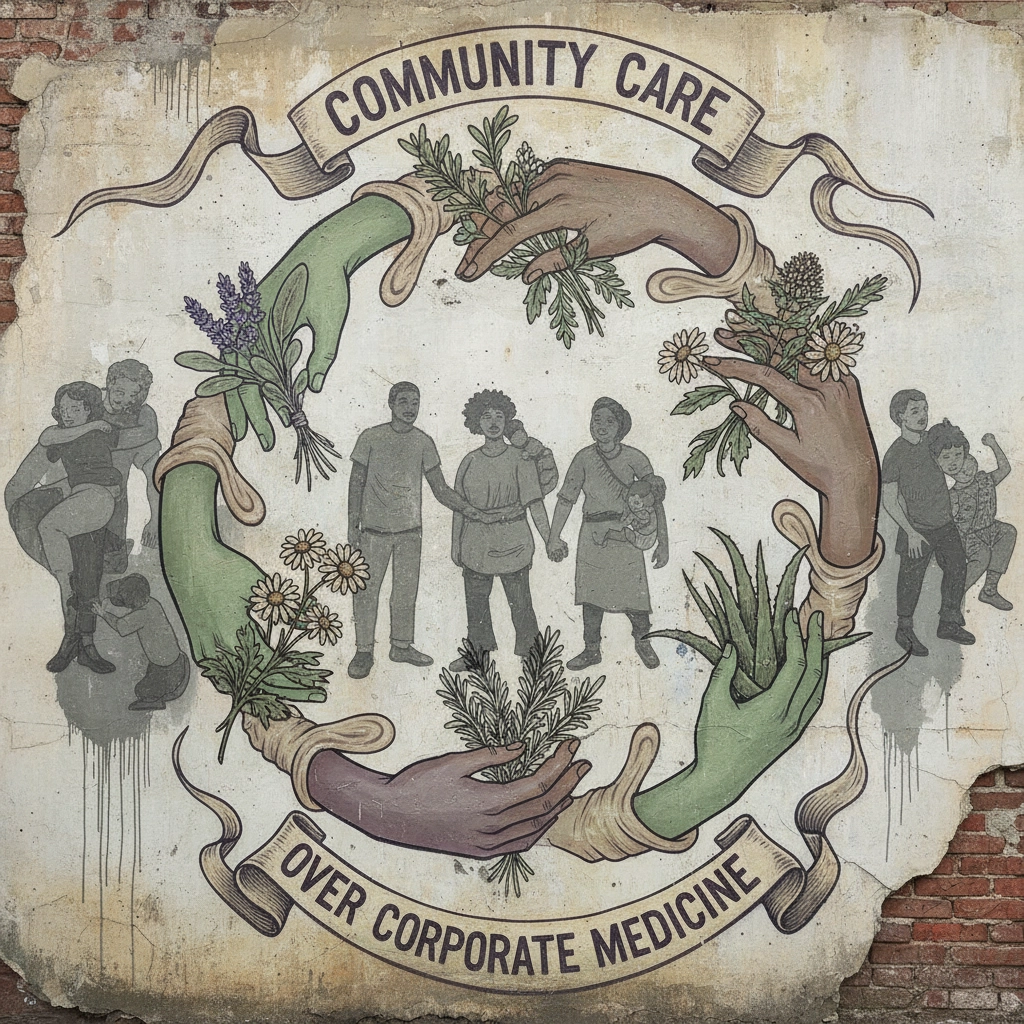
Herbal medicine cooperatives grow, harvest, and prepare medicinal plants as communities have done for thousands of years. Before pharmaceutical monopolies, communities maintained extensive knowledge of plant-based healing. This knowledge still exists: it just needs to be shared and practiced.
Community acupuncture clinics provide affordable treatment in group settings. Training community members in basic acupuncture techniques makes this healing modality accessible without corporate medical pricing.
4. Economic Alternatives: Keeping Wealth Local
Extractive Economics Impoverish Communities
Corporate retail chains, chain restaurants, and national banks extract wealth from local communities, sending profits to distant shareholders. For every dollar spent at a local business, approximately 68 cents stays in the community. For chain stores, only 43 cents remains local.
Time banking systems allow community members to exchange services without money. One hour of work equals one time credit, regardless of the specific service provided. Members earn credits by helping neighbors and spend credits when they need assistance.
Local currency systems keep spending within the community. BerkShares in Massachusetts and Ithaca Hours in New York demonstrate how local currencies support regional businesses while building community connections.
Community loan funds provide capital for local projects without corporate bank approval. Members contribute to a shared fund that offers low-interest loans for home improvements, small business startup costs, or emergency expenses.
5. Information Networks: Truth Outside Corporate Media
Corporate media serves advertisers and shareholders, not communities seeking accurate information about local conditions and opportunities.
Community journalism cooperatives train residents to document local issues, investigate corporate malfeasance, and share news through independent platforms. These grassroots media networks counter corporate propaganda with locally-sourced information.
Neighborhood communication systems use mesh networks, bulletin boards, and community meetings to share information without corporate platform dependence. When social media companies censor or manipulate information, community-controlled networks remain reliable.
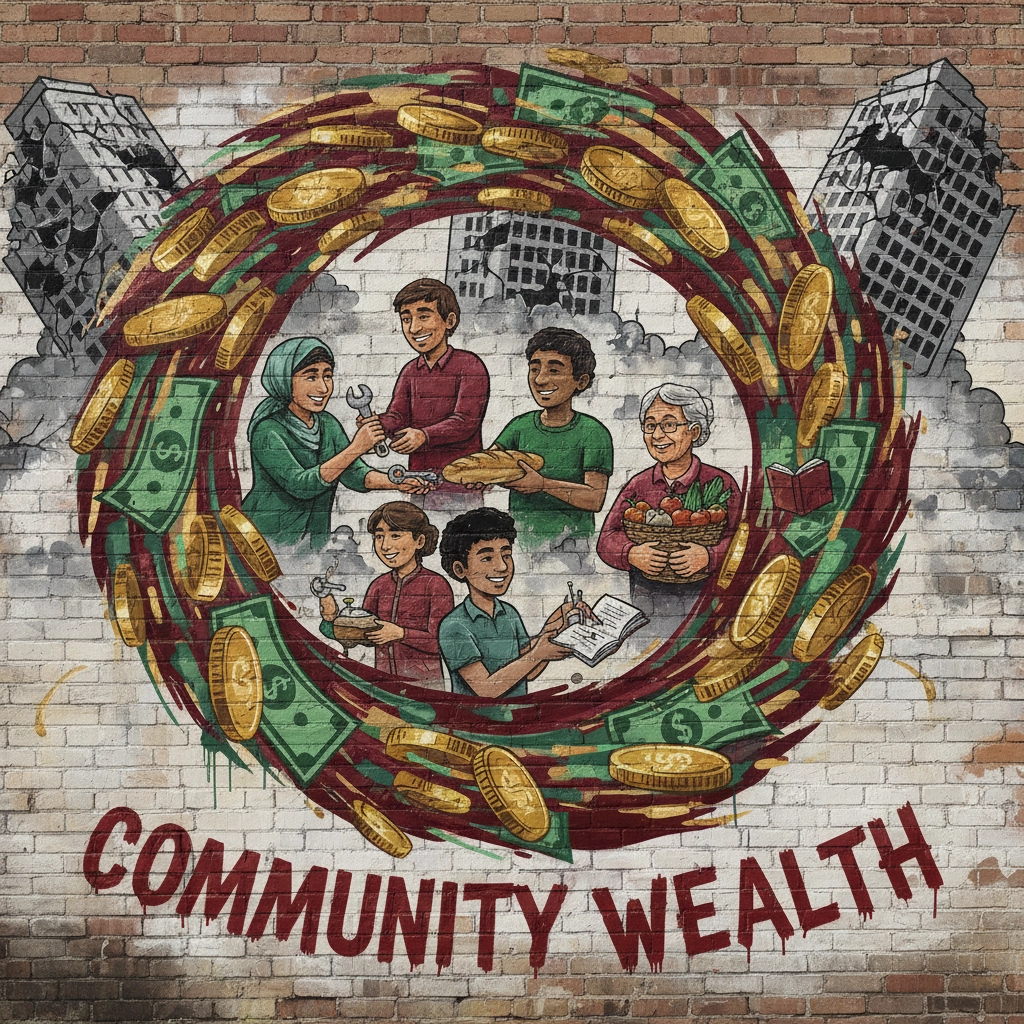
Community education programs teach practical skills: permaculture, renewable energy installation, basic healthcare, financial literacy: that reduce dependence on corporate service providers.
This Isn't Charity: It's Community Self-Defense
These systems aren't charity projects or lifestyle experiments. They're community self-defense against systematic corporate exploitation. When utilities shut off power, community solar keeps lights on. When grocery stores abandon neighborhoods, community gardens provide fresh food. When healthcare becomes unaffordable, community health networks offer alternatives.
Start Where You Are
Begin with one project that addresses your community's most pressing need. Success builds credibility and attracts additional participants. Connect with existing organizations: religious congregations, neighborhood associations, environmental groups: that already have community trust and infrastructure.
Scale Through Networks
Connect your local projects with similar initiatives in nearby communities. Share resources, knowledge, and mutual support. Regional networks provide resilience when individual communities face challenges or opposition.
Prepare for Resistance
Corporate and government authorities will oppose community independence. They profit from dependence and control. Expect regulatory challenges, corporate competition, and political obstacles. Build legal support networks and document everything to protect community investments.
The Blueprint in Action
Successful defiant communities integrate all these elements: food production connects to energy projects, healthcare networks support economic alternatives, and communication systems coordinate mutual aid. This integration creates community resilience that no single corporate failure can destroy.
The corporate system is already failing millions of Americans. The question isn't whether alternatives are necessary: it's whether your community will build them proactively or wait for crisis to force change.
Your neighbors are ready. The knowledge exists. The resources are available. What's missing is the collective decision to start building the world your community deserves.
Every community garden challenges industrial agriculture. Every solar cooperative weakens utility monopolies. Every time bank transaction bypasses corporate banking. Every community health circle reduces pharmaceutical dependence.
These aren't small acts of resistance. They're the foundation of a parallel economy that serves people instead of profits. The blueprint exists. The question is whether you'll help build it.
Member discussion