
The Ultimate Guide to Anti-Corporate Messaging: How to Build Movements (Not Just Manage Reputations)
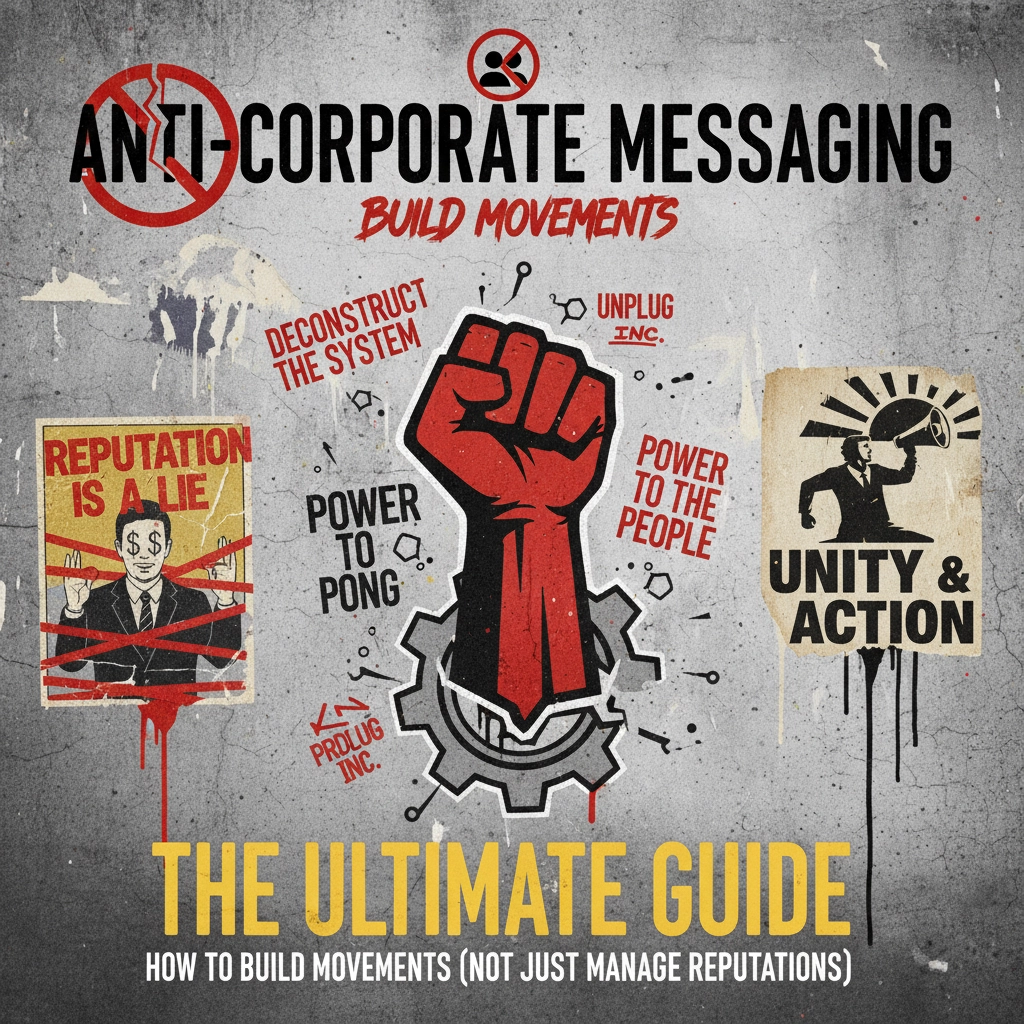
The difference between managing corporate reputations and building genuine movements isn't just tactical: it's philosophical. While PR agencies help corporations minimize damage, authentic anti-corporate movements aim to transform systems entirely. This guide breaks down how to build real resistance that creates lasting change, not just temporary image fixes.
Understanding the Strategic Divide
Most traditional PR work focuses on damage control. A corporation faces backlash, so agencies craft messaging to soften public anger and restore market confidence. Anti-corporate movement building operates from the opposite premise: the goal isn't to make corporations more palatable, but to fundamentally restructure how economic power operates in society.
According to research on anticorporate progressivism, successful movements must first convince the public that corporate performance is systematically deficient across multiple dimensions: excessive prices and profits, inadequate innovation, insufficient worker protections, and violated consumer privacy. This isn't about isolated policy fixes: it's about shifting public consciousness toward rejecting corporate dominance entirely.

The Tactical Arsenal: Beyond Boycotts
Effective anti-corporate campaigns deploy interconnected strategies that create pressure from multiple angles simultaneously:
Direct Economic Pressure
Boycotts remain visible tactics, but they work best when combined with shareholder activism and divestment campaigns. The key is targeting vulnerable financial relationships rather than hoping consumer sentiment alone will force change. Investment funds, pension systems, and institutional shareholders often respond faster to organized pressure than individual consumer choices.
Legal and Regulatory Warfare
Litigation, regulatory lobbying, and codes of conduct development provide formal channels for embedding victories into enforceable standards. These approaches gain credibility when backed by grassroots organizing and public pressure campaigns, creating a two-front war that corporations struggle to manage simultaneously.
Information Operations
Research groups, communication networks, and publicity campaigns provide the foundation for all other tactics. Movements that fail to invest in rigorous documentation typically lose credibility during extended campaigns. Corporate opponents will challenge every fact, so your research infrastructure must be bulletproof.
Coalition Building
The most successful campaigns combine research, advocacy, media work, legal action, community organizing, and direct action at once. This creates what researchers call "comprehensive action combinations": synergistic approaches where each tactic amplifies the others.
Movement Building vs. Reputation Repair
The fundamental difference lies in your relationship to corporate power. Reputation management accepts corporate dominance and seeks marginal improvements within existing systems. Movement building rejects the premise that large corporations should control economic decisions and works to construct genuine alternatives.
Strengthening Cross-Movement Connections
Isolated campaigns become vulnerable to corporate divide-and-conquer tactics. Effective movements connect across people, organizations, sectors, and issues to coordinate messaging and align strategic timing. When environmental groups, labor organizations, consumer advocates, and community organizers synchronize their campaigns, corporations face pressure they can't compartmentalize or deflect.
Developing Distributed Leadership
Corporate strategists often target charismatic movement leaders for co-optation or character assassination. Building distributed leadership pipelines prevents movements from collapsing when key figures face pressure. This means training emerging leaders to carry forward movement principles, not just specific campaigns.
Maintaining Independence
Social movements must resist corporate attempts at co-optation to succeed in preventing undesired projects. This directly contradicts corporate strategy, which uses CSR initiatives, stakeholder engagement, and selective community benefits to divide opposition and manufacture consent.
Countering Corporate Co-optation Strategies
Corporations deploy sophisticated tactics to weaken resistance movements. Understanding these strategies helps movements prepare defenses:
The Divide and Rule Approach
Companies deliberately create internal divisions within communities by offering selective benefits: infrastructure investments, scholarships, employment opportunities: that some community members accept while others refuse. Once divided, corporations publicly demonstrate "community support" through photographs and testimonies, fracturing unified opposition.
Stakeholder Engagement Manipulation
Corporations identify influential community leaders and target them with engagement initiatives designed to co-opt resistance. These aren't genuine concessions; they're strategic investments in fragmenting unified opposition.
Counter-Strategy: Education and Cohesion
Successful movements educate members about these divisive tactics from the outset, using real examples of communities that successfully resisted co-optation. The Ngöbe-Buglé community in Panama successfully rejected a copper mining project by refusing to engage with corporate co-optation attempts and maintaining unified opposition throughout the campaign.

This Isn't About Being Anti-Business: It's About Democracy
The corporate PR framing of anti-corporate activism as "anti-business" deliberately mischaracterizes the fundamental issue. Small businesses, worker cooperatives, and community-owned enterprises aren't the target. The problem is concentrated corporate power that undermines democratic decision-making in communities.
When a handful of executives can decide whether to close factories, contaminate water supplies, or eliminate entire job categories without meaningful public input, that's not a market economy: it's economic authoritarianism. Movements that effectively communicate this distinction avoid getting trapped in debates about capitalism versus socialism and focus on democratic accountability.
Building Sustainable Resistance Infrastructure
Growing movements face constant pressure to professionalize quickly or accept corporate funding. These temptations typically neutralize transformative potential by incorporating movements into the very systems they oppose.
Resource Independence
Sustainable movements develop funding sources aligned with their values. This might mean relying on small individual donations, community fundraising, or grants from foundations without corporate ties. Financial independence preserves strategic independence.
Institutional Memory
Movements that depend on charismatic leaders often collapse when those leaders burn out or get co-opted. Building institutional memory through documentation, training programs, and organizational structures helps movements survive leadership transitions.
Strategic Patience
Corporate campaigns often last years or decades. Movements need frameworks for maintaining morale and momentum during extended struggles while celebrating incremental victories without losing sight of transformative goals.

Integrated Messaging Framework
Effective anti-corporate messaging integrates evidence, narrative, and strategy:
Research Foundation: Document corporate harms across multiple dimensions with rigorous evidence that can withstand legal and media scrutiny.
Narrative Construction: Frame corporate behavior as systematic, preventable, and transformable rather than isolated incidents or natural market outcomes.
Tactical Sequencing: Combine quick-win campaigns that build momentum with long-term structural organizing that addresses root causes.
Coalition Alignment: Ensure diverse organizational partners maintain shared strategic objectives despite tactical differences.
Leadership Development: Train emerging leaders to carry forward movement principles through changing political circumstances.
The Strategic Choice
Every communication choice reflects a strategic orientation. Will you help corporations manage their reputations more effectively, or will you build movements that challenge corporate power entirely? The tactics might look similar: research, messaging, coalition building, media work: but the underlying goals transform everything.
Reputation management accepts corporate dominance and seeks marginal improvements. Movement building rejects that premise and uses integrated messaging to construct genuine alternatives. The choice determines whether your work reinforces existing power structures or helps communities build democratic alternatives.

The question isn't whether you're against corporations: it's whether you believe communities should have democratic control over the economic decisions that affect their lives. That's the foundation for messaging that builds movements rather than just managing reputations.
For more insights on building authentic movements and challenging institutional power, explore our resources on social movements and dissent management.
Member discussion