
The Growing Prison Next Door: Mapping (and Resisting) Local Jails, Detention Centers, and Police Expansion

Your county is quietly building the infrastructure of oppression while you're focused on federal politics. Every month, local governments expand their carceral capacity through new jails, detention centers, and police facilities: often with minimal public input or oversight. This isn't just about criminal justice; it's about creating the physical framework for social control at the community level.
The average daily jail population reached 664,800 in 2023, representing a steady climb in local incarceration despite years of reform rhetoric. But the real story isn't just the numbers: it's how these facilities are strategically placed, funded, and expanded to maximize their impact on specific communities.
1. Understanding Your Local Carceral Landscape
Most people have no idea what detention infrastructure exists in their area. County jails, immigration detention centers, juvenile facilities, and police substations form an interconnected web of surveillance and control that operates largely out of public view.
Start by mapping your local facilities using public records. County budgets, planning commission minutes, and sheriff's department reports contain crucial information about existing capacity and expansion plans. The Bureau of Justice Statistics maintains databases, but local records often reveal details federal data misses.
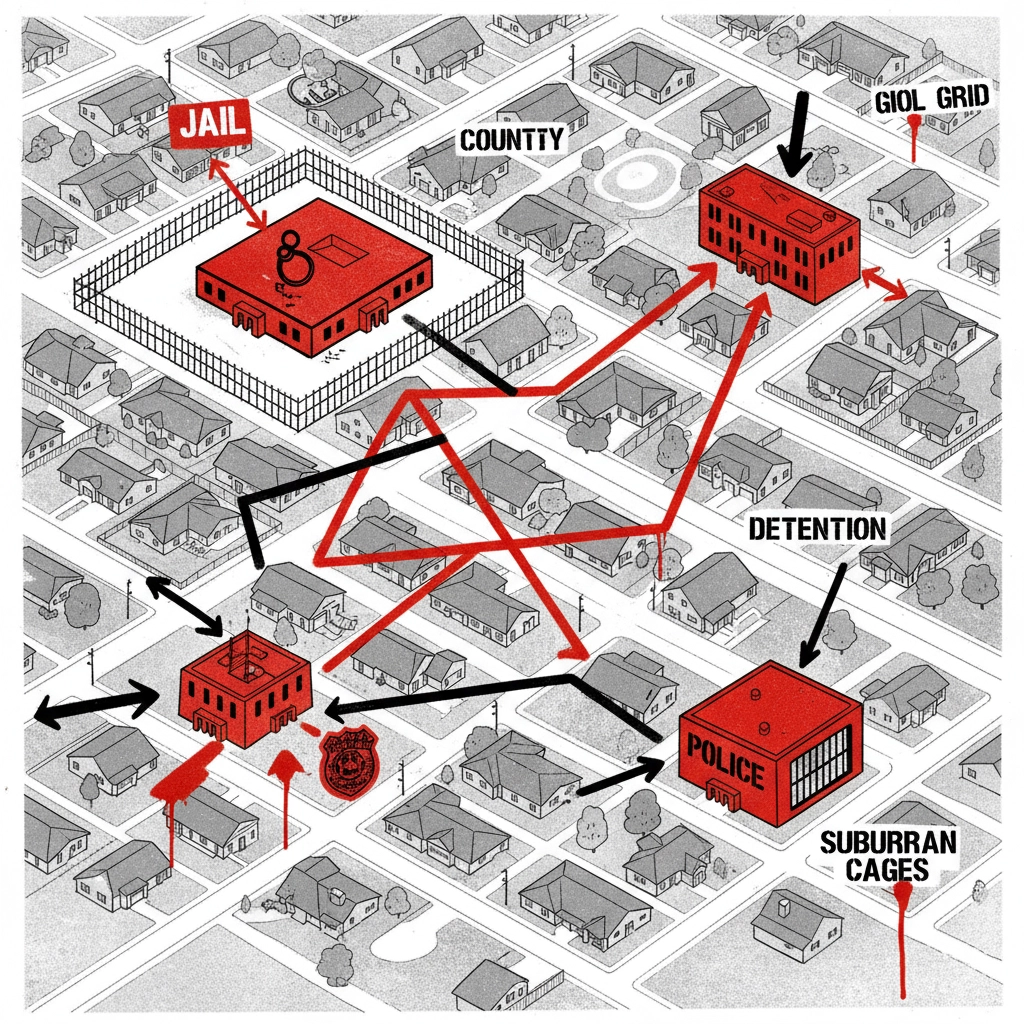
Search for terms like "bed capacity," "facility expansion," "detention services," and "correctional partnerships" in county meeting minutes. Look for private prison companies like CoreCivic or GEO Group appearing in contracts or bids: their involvement signals major expansion efforts.
Your state's Department of Corrections website typically lists all licensed facilities, including private ones. Cross-reference these with property records to understand ownership structures and recent expansions.
2. Follow the Money Trail
Jail expansion isn't cheap, and the funding mechanisms reveal the true priorities of local officials. Counties use various strategies to finance new facilities while minimizing public scrutiny:
Municipal Bonds allow counties to build now and pay later, often without direct voter approval. These appear in bond prospectuses and county financial statements as "public safety infrastructure" or "criminal justice facility improvements."
Federal Grants from DHS, DOJ, and other agencies subsidize local expansion. Check your county's grant applications and awards: they're public records that reveal expansion timelines and federal priorities being implemented locally.
Private Partnerships involve companies building and operating facilities in exchange for guaranteed occupancy rates. These contracts commit taxpayers to filling beds regardless of crime rates, creating perverse incentives for increased arrests and longer sentences.
Asset Forfeiture funds from seized property often flow directly into police and sheriff budgets for facility improvements and expansions. These funds operate with minimal oversight and create direct incentives for aggressive policing.
3. Identifying Expansion Patterns and Targets
Carceral expansion follows predictable patterns that reveal the political and economic logic behind mass incarceration. New facilities are strategically located to maximize control over specific populations and communities.
Demographic Targeting is visible in facility placement. New jails and detention centers are often built near low-income communities and communities of color, while being far enough from wealthy areas to minimize their political influence over operations.
Economic Capture occurs when counties build oversized facilities and then contract with other jurisdictions or agencies to house their detainees. This turns incarceration into a revenue stream, creating economic dependency on maintaining high detention rates.
Capacity Creep happens when "temporary" expansions become permanent, or when facilities built for specific purposes (immigration, pre-trial detention) expand their scope once constructed.

Watch for planning applications that mention "flexibility" or "multi-use" capabilities: these signal facilities designed to expand their detention functions over time. Immigration detention centers are particularly prone to this, often evolving into general-purpose facilities for whoever needs housing.
4. The Technology Integration Factor
Modern carceral expansion isn't just about concrete and steel: it's increasingly about surveillance technology integration. New facilities are designed as hubs for broader community monitoring systems.
Biometric Systems connect jails to databases used by schools, welfare offices, and employment centers. New facilities often include advanced fingerprinting, facial recognition, and DNA collection capabilities that feed into broader surveillance networks.
Communication Monitoring equipment in new facilities is designed to capture and analyze all inmate communications, including privileged attorney-client calls. This creates intelligence databases used for prosecution and community surveillance.
Electronic Monitoring infrastructure is often built into new facilities to support expanded house arrest and pre-trial supervision programs. While marketed as alternatives to incarceration, these systems extend carceral control into homes and communities.
Data Sharing Networks connect local facilities to federal databases, ICE systems, and private data brokers. New facilities are designed as nodes in national surveillance networks, not just local detention centers.
5. Building Community Intelligence Networks
Effective resistance requires organized intelligence gathering and sharing. Individual efforts can't track the complex web of contracts, budgets, and political relationships that drive carceral expansion.
Create Coalition Mapping Projects that bring together different community groups to pool information and resources. Labor unions often have insight into construction contracts, while civil rights groups track facility conditions and constitutional violations.
Establish Public Records Protocols that systematically request and analyze key documents. Rotate Freedom of Information Act requests among different community members to avoid appearing coordinated to county officials.
Attend Every Meeting where these decisions are made. County commission meetings, planning board hearings, and budget sessions are where expansion plans are approved with minimal public input. Consistent presence makes officials uncomfortable and provides early warning of new initiatives.

Document Personal Connections between officials, contractors, and facility operators. Local carceral expansion often involves revolving doors between government positions and private companies, creating conflicts of interest that can be exposed and challenged.
6. Direct Resistance Strategies
Knowledge without action is complicity. Once you understand your local carceral landscape, several resistance strategies can effectively disrupt expansion efforts and impose costs on the system.
Budget Disruption involves showing up to every budget hearing to challenge carceral spending line items. Bring detailed questions about cost overruns, recidivism rates, and alternative program effectiveness. Force officials to justify every dollar spent on detention infrastructure.
Contractor Pressure targets the companies building and operating these facilities. Research their other contracts, board members, and financial relationships. Private prison companies are particularly vulnerable to public pressure campaigns that highlight their human rights records.
Legal Challenges can delay and increase costs for expansion projects. Environmental impact requirements, zoning violations, and constitutional challenges create uncertainty that makes investors nervous about funding projects.
Direct Action ranges from permitted protests to civil disobedience designed to increase the political costs of expansion. Facility groundbreakings and ribbon-cutting ceremonies are particularly effective targets for disruption.
7. Building Alternative Infrastructure
The most effective long-term resistance involves creating community-controlled alternatives that make carceral expansion politically and economically unnecessary.
Community Defense Programs provide conflict resolution, mental health crisis intervention, and violence interruption services that address root causes rather than symptoms. When communities can handle their own problems, jail expansion becomes harder to justify.
Economic Alternatives create jobs and stability that reduce the conditions leading to criminalization. Community land trusts, worker cooperatives, and mutual aid networks provide material support that makes people less vulnerable to arrest and detention.
Political Alternatives involve running candidates committed to decarceral policies and community investment. Local elections often have low turnout, making organized communities disproportionately influential in selecting sheriffs, county commissioners, and district attorneys.
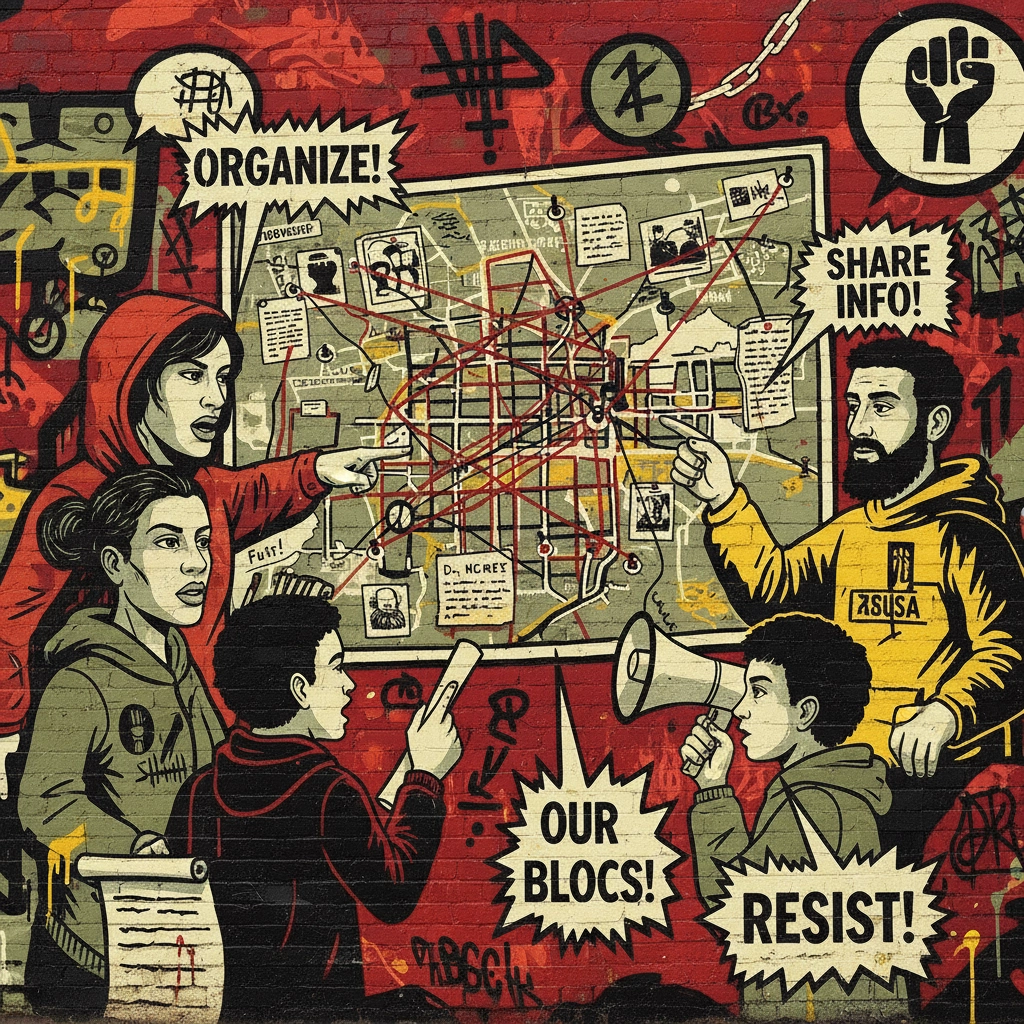
Resource Redirection campaigns demand that money currently spent on jails and police be invested in education, healthcare, housing, and job training. These campaigns make the opportunity costs of carceral spending visible to broader community members.
8. Networking Beyond Your County
Carceral expansion operates at regional and national levels, requiring resistance networks that match the scale of the problem. Counties often coordinate their expansion efforts and share resources, making isolated local resistance less effective.
Regional Coalitions connect communities facing similar expansion pressures. Private prison companies and federal agencies often target multiple counties simultaneously, making coordinated resistance more effective than isolated local efforts.
Information Sharing Networks help communities learn from each other's successes and failures. What works to stop jail construction in one county might be applicable elsewhere, while failed strategies can be avoided.
Resource Sharing allows communities to pool expertise, funding, and organizational capacity. Legal challenges, research projects, and media campaigns are more effective when multiple communities contribute resources.
National organizations like Critical Resistance and local prison abolition groups provide training, resources, and coordination support for communities fighting carceral expansion.
The infrastructure of oppression is being built in your backyard while you're distracted by national politics. Every new jail bed represents someone's future cage, and every expanded detention center means deeper community surveillance and control.
Your county commissioners are approving these projects in meetings where three people show up. Your sheriff is requesting federal grants to buy military equipment and surveillance technology. Your local newspapers are printing press releases instead of investigating these expansions.
This isn't happening to someone else, somewhere else. It's happening in your community, with your tax dollars, in your name. And if you're not actively fighting it, you're actively enabling it.
The choice is simple: build community power that makes carceral expansion impossible, or watch as your neighbors are caged and your community is militarized. There's no neutral ground in the fight against mass incarceration: only resistance and complicity.
Start mapping your local carceral infrastructure today. Your community's freedom depends on understanding the scope of the threat and building organized resistance that matches its scale and urgency.
Member discussion