
How to Organize a Mutual Aid Network That Survives State Repression
They want you isolated. They want you dependent. They want you scrambling for scraps while they hoard resources and power. The state's greatest fear isn't your vote: it's your ability to organize with your neighbors and meet your own needs without their permission.
1. The State's Playbook Against Community Power
Every authoritarian regime follows the same script: divide communities, create dependence on centralized systems, and crush any alternative networks that threaten their control. When people organize mutual aid networks, they're building parallel power structures that operate outside state approval. This terrifies those in charge because it proves their institutions aren't necessary for survival.
Look at how quickly authorities moved against mutual aid efforts during the 2020 uprisings. Food distribution in parks was labeled "unpermitted gatherings." Legal observers were arrested. Medics were targeted with chemical weapons. The message was clear: we'll tolerate your dissent as long as you remain powerless and dependent.
The state doesn't fear your anger: they fear your organization. They don't fear your protests: they fear your ability to create alternatives to their systems. That's why building mutual aid networks that can survive repression isn't just community service: it's revolutionary practice.
2. Start With Material Reality, Not Abstract Politics
Successful mutual aid networks begin with concrete needs in your immediate community. Food insecurity, eviction threats, medical debt, childcare gaps: these aren't policy debates, they're daily survival struggles that people face right now. Your network's legitimacy comes from meeting real needs, not from perfect political theory.
Begin by mapping the actual conditions in your neighborhood. Who's struggling with rent? Who needs childcare? Who lacks reliable transportation? Who's dealing with medical emergencies without insurance? This isn't charity work: it's intelligence gathering for building community power.
The Black Panther Party's survival programs weren't social services: they were political education in action. When they fed 20,000 children breakfast every morning, they demonstrated that community organization could meet needs that the state ignored. Every meal served was proof that people could care for each other without depending on systems designed to exploit them.
3. Build Relationships Before You Need Them
State repression intensifies during crises, which is exactly when communities need mutual aid networks most. If you're trying to organize for the first time during an emergency, you're already too late. The relationships, trust, and infrastructure must exist before the crisis hits.
Create neighborhood pods of 5-15 people who commit to supporting each other through ordinary challenges. Share resources during normal times: ride shares, meal trains for sick neighbors, childcare exchanges, tool libraries. These everyday practices build the social fabric that holds networks together under pressure.
Pod mapping involves identifying people in your existing networks who would show up during emergencies. Start with family, friends, coworkers, neighbors, and community connections. Build outward from there, creating redundant connections so the network doesn't collapse if any individual leaves or faces repression.
4. Decentralize Everything
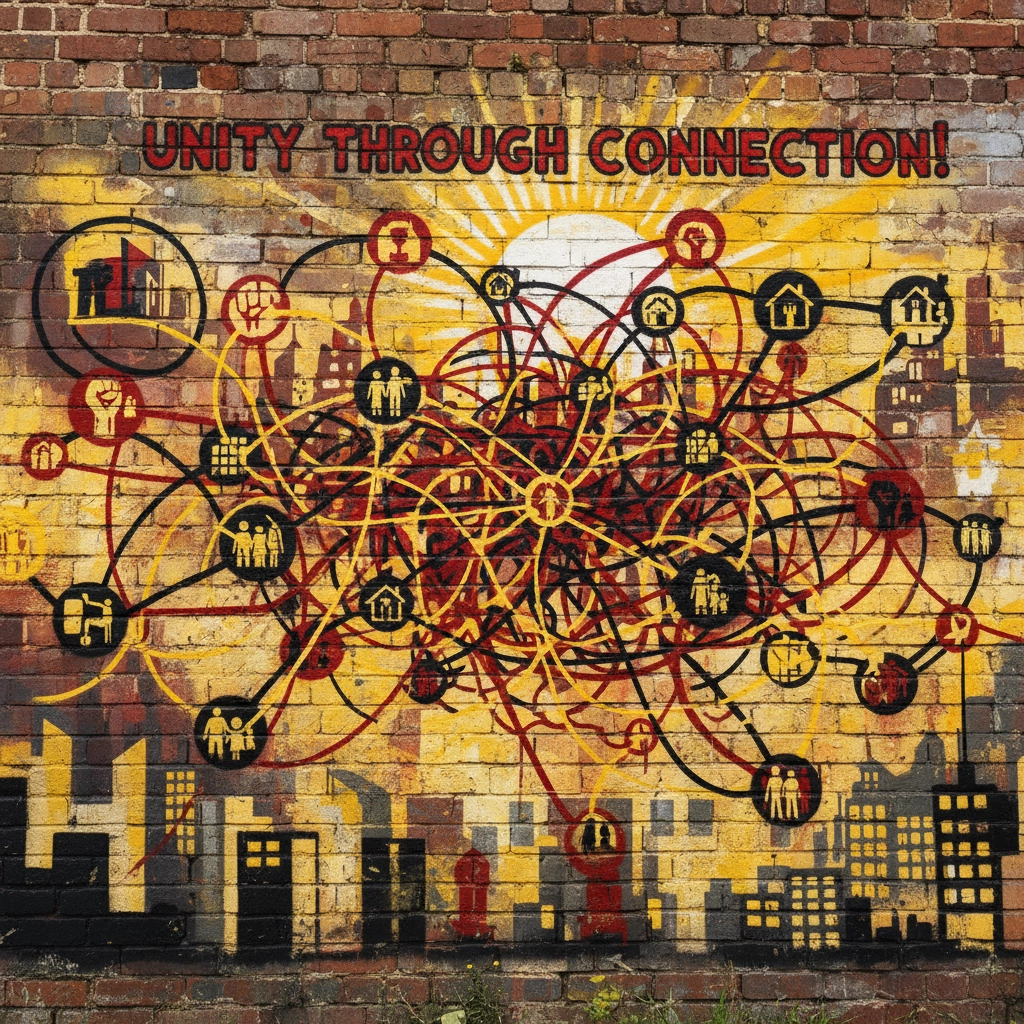
Hierarchical organizations create single points of failure. When authorities want to disrupt your network, they target leaders, freeze bank accounts, or raid headquarters. Decentralized networks are harder to destroy because power is distributed across many people and locations.
Instead of one central group making decisions for everyone, create a network of autonomous pods that coordinate with each other. Each pod handles its own area and specializes in particular needs: one focuses on food distribution, another on eviction defense, another on medical support. They share information and resources but can operate independently.
Use non-hierarchical decision-making processes where consensus builds through discussion rather than top-down commands. This takes longer but creates stronger commitment and reduces the impact when individual members face arrest or harassment.
5. Communication Security Isn't Paranoia
Assume your communications are monitored. Social media platforms, messaging apps, and email services all cooperate with law enforcement requests. Build communication systems that don't rely on centralized platforms that can be shut down or surveilled.
Develop phone trees where information passes through trusted personal relationships rather than mass digital broadcasts. Use signal-boosting through multiple smaller channels instead of single large announcements. Meet in person regularly to maintain relationships that don't depend on digital infrastructure.
For sensitive coordination, learn basic digital security practices: encrypted messaging, secure file sharing, and compartmentalized information sharing where people only know what they need to know for their specific roles.

THIS ISN'T CHARITY: IT'S INFRASTRUCTURE FOR RESISTANCE
6. Connect Immediate Needs to Systemic Analysis
Meeting survival needs without addressing root causes creates endless dependency. The most powerful mutual aid networks combine material support with political education that helps people understand why these needs exist and how community organization can challenge those systems.
When you organize eviction defense, connect it to broader housing justice analysis. When you distribute food, discuss food apartheid and corporate agriculture. When you provide medical support, examine how profit-driven healthcare creates medical debt and rationed care.
This politicization transforms charity into organizing. Instead of temporarily alleviating suffering, you're building collective understanding about the systems that create that suffering and developing community capacity to challenge those systems.
7. Resource Procurement and Distribution
Sustainable mutual aid networks require reliable resource flows that don't depend on charitable donations or grants with strings attached. Develop multiple revenue streams: membership contributions, fundraising events, skill-sharing workshops, and community enterprises.
Create resource-sharing systems that circulate wealth within your community rather than extracting it. Tool libraries, clothing swaps, skill exchanges, and time banks build abundance while reducing dependence on capitalist markets.
For food distribution, connect directly with farmers, establish community gardens, and organize bulk purchasing cooperatives. For housing support, learn tenant organizing, connect with sympathetic lawyers, and develop rapid response networks for eviction defense.
8. Legal and Physical Security
Mutual aid activities are generally legal, but state repression often operates outside legal boundaries. Prepare for harassment, surveillance, and criminalization of your activities through bogus permit requirements, health code violations, or "public safety" concerns.
Document everything. Record interactions with police. Know your rights around assembly, distribution of food, and use of public space. Connect with legal observers and civil rights lawyers before you need them.
Develop security culture practices that protect member information and sensitive planning discussions. Use secure meeting spaces, vary locations and times, and be cautious about who has access to member lists, financial information, and strategic planning.
9. Scale Without Losing Soul
As your network grows, resist the temptation to formalize into traditional nonprofit structures that prioritize legality over effectiveness. Nonprofits must moderate their activities to maintain tax-exempt status, which limits their ability to engage in direct action or challenge systems root causes.
Instead, scale through proliferation: help other neighborhoods start their own autonomous networks rather than expanding your single organization. Provide training, share resources, and coordinate activities while maintaining independent operation.
When your pod reaches 20-30 active members, consider splitting into multiple pods that coordinate with each other. This maintains the close relationships that make mutual aid effective while expanding overall capacity.
10. Long-Term Vision and Revolutionary Practice
Mutual aid networks that survive repression understand they're not just providing services: they're building alternative economic and social systems that could eventually replace state and capitalist institutions.
This means developing community enterprises, cooperative ownership structures, and democratic decision-making processes that demonstrate how society could function without exploitation and domination. Every successful mutual aid project is proof that people can organize themselves without bosses, profits, or police.
Connect your local work to broader movements for housing justice, economic democracy, police abolition, and environmental justice. Your neighborhood network is part of a larger ecosystem of resistance that's challenging the entire structure of this system.
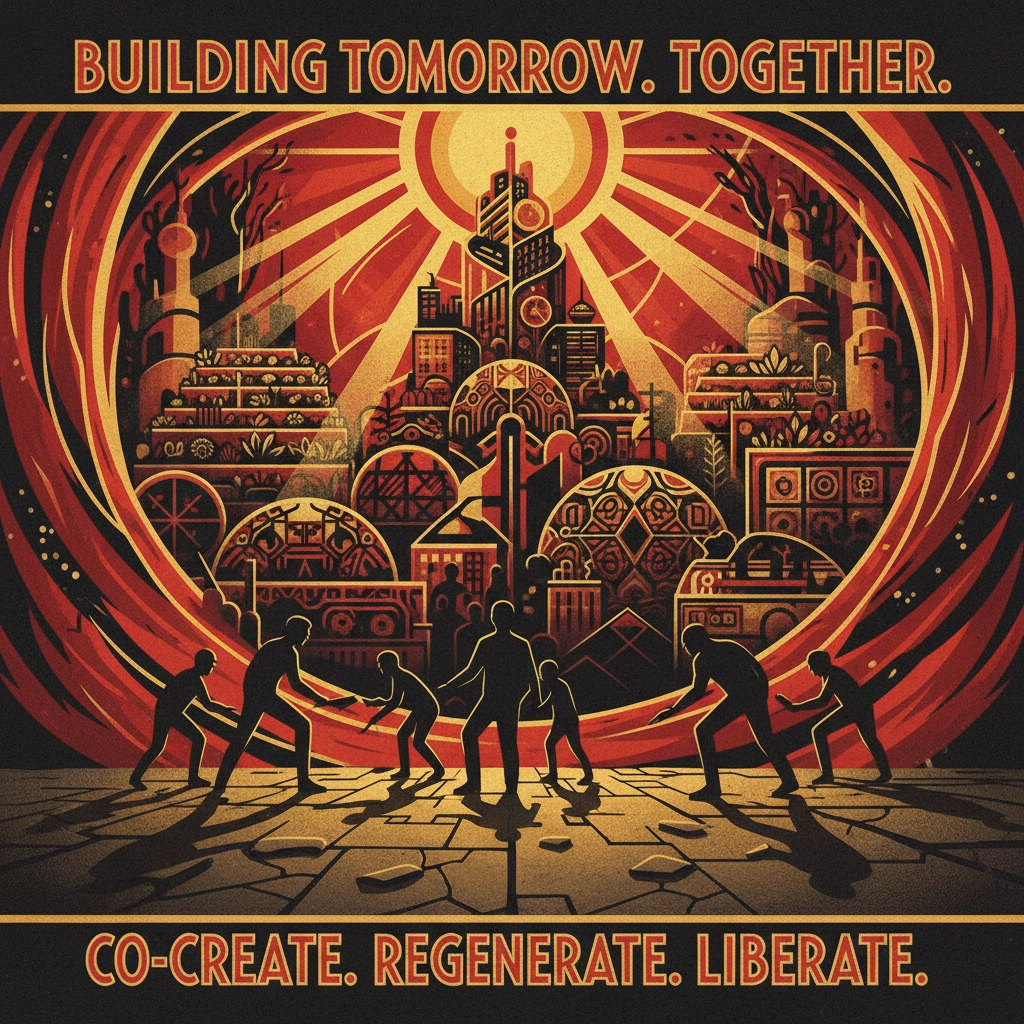
Your Role in This Revolution
The question isn't whether state repression will intensify: it's whether communities will be organized enough to survive and resist when it does. Every day you wait to start organizing with your neighbors is another day of lost preparation time.
Start small, start local, start now. Find two other people who care about community resilience. Identify one concrete need you can address together. Begin building the relationships and skills your neighborhood will need when the systems fail or turn against you.
The state counts on your isolation and dependency. Prove them wrong. Every mutual aid network that forms breaks their monopoly on survival resources. Every community that organizes reduces their power to control through scarcity and fear.
Stop waiting for permission to care for each other. The blueprint exists: study the Black Panthers, learn from indigenous organizing traditions, connect with current mutual aid networks in your area. The infrastructure for revolution builds one relationship, one shared resource, one collective action at a time.
Your community's survival depends on your ability to organize outside state systems. Their repression depends on your inability to imagine alternatives to their control. Choose which future you're building with every decision you make about how to respond to your neighbors' needs.
The revolution isn't coming: it's happening every time people choose collective care over individual competition, every time communities meet their own needs without asking permission, every time mutual aid networks prove that another world is possible.
Build it now, before you need it. Because when the crisis comes: and it will come: the communities that survive will be the ones that organized before the storm.

Member discussion