
BURN THE LIES: HOW TO SPOT FAKE NEWS SITES, EXPOSE SHILL INFLUENCERS, AND FACT-CHECK WHEN THE SYSTEM IS RIGGED
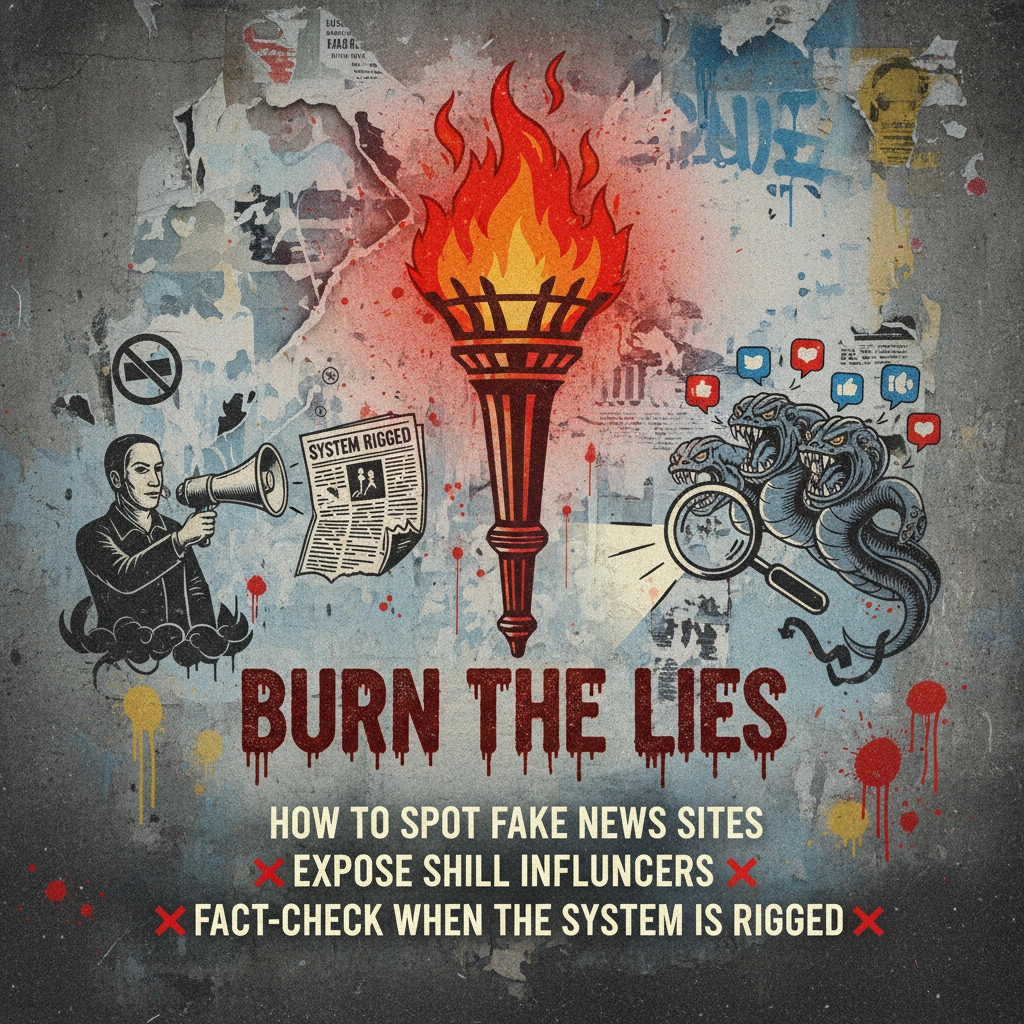
The information wars are real, and you're losing. Every day, millions of Americans consume lies disguised as news, follow influencers who are corporate puppets, and believe "facts" manufactured in boardrooms. The misinformation machine isn't broken: it's working exactly as designed to keep you confused, divided, and powerless.
But you can fight back. Here's your tactical guide to cutting through the noise, exposing the frauds, and finding truth when the entire system profits from your ignorance.
1. Decoding Fake News Sites: The Red Flags They Don't Want You to Notice
Real newsrooms have standards, budgets, and accountability. Fake news sites have none of these: just profit motives and political agendas. Here's how to spot them instantly.
Check the domain like your life depends on it. Legitimate news organizations invest in proper domains: CNN.com, Reuters.com, AP.org. Fake news sites use suspicious variations: "RealAmericaNews.net" or "TruthEaglePatriot.info." If the domain name sounds like a political slogan, it's probably propaganda.
Investigate their "About Us" page. Real news sites list their staff, editorial standards, and contact information. Fake sites either have no "About" page or fill it with vague mission statements about "bringing truth to patriots" without naming actual humans. No names = no accountability.
Follow the money trail. Who funds this site? Real journalism costs money: reporters' salaries, fact-checkers, legal departments. If you can't figure out how a site pays its bills, someone else is paying them to influence you. Look for disclosure statements about funding sources.
Examine their other content. Scroll through their homepage. Do they only cover one political angle? Do they sell supplements, survival gear, or investment schemes alongside "news"? These aren't journalism sites: they're marketing operations disguised as media.

2. The Influencer Industrial Complex: How to Spot Corporate Puppets
Social media influencers aren't just pretty faces with opinions: they're often paid actors in the information war. The FTC requires disclosure, but enforcement is weak and loopholes are everywhere.
Look for the telltale patterns. Real people have varied interests and occasionally contradict themselves. Shill influencers stay obsessively on-message about specific topics: usually ones that benefit their paymasters. If someone's entire feed pushes the same narrative without deviation, they're probably getting paid for it.
Check their follower authenticity. Tools like Social Blade can reveal suspicious follower growth patterns. Real influence builds gradually; fake influence gets purchased in bulk. Sudden spikes in followers, especially from foreign accounts with no profile pictures, indicate bot armies.
Analyze their product placement. The best corporate shills weave advertising seamlessly into "authentic" content. They'll casually mention specific brands, link to particular products, or repeatedly discuss topics that benefit certain industries: all while pretending it's organic conversation.
Research their network connections. Shills often promote each other and appear on the same platforms simultaneously. If you notice multiple "independent" voices saying identical things using similar language, you've found a coordinated influence campaign.
3. Fact-Checking When the Fact-Checkers Are Compromised
Traditional fact-checking organizations have their own biases and corporate relationships. You need to verify information independently using multiple sources and methods.
Master the art of source triangulation. Never trust a single source, no matter how credible it seems. Find three independent sources reporting the same facts using different evidence. If only one organization is making a claim, treat it as unverified until confirmed elsewhere.
Use primary source documentation. Skip the commentary and go straight to the documents: court filings, government reports, academic studies, corporate earnings statements. These contain the raw data that reporters and pundits interpret: often selectively.
Deploy open-source intelligence tools. Reverse image searches reveal when photos are recycled from other stories. Archive.today captures web pages before they can be edited or deleted. Domain registration databases show who owns suspicious websites. These tools put professional-grade verification in your hands.
Cross-reference against multiple search engines. Google, Bing, and DuckDuckGo return different results due to their algorithms and partnerships. A story that only appears in one search engine's results deserves extra scrutiny.
THIS ISN'T INFORMATION: IT'S WARFARE
The stakes couldn't be higher. This isn't about getting your facts straight for dinner party conversations: it's about maintaining the ability to think independently in a system designed to manipulate your thoughts for profit and control.
Corporate media consolidation means six companies control 90% of American media. Social media algorithms amplify content that generates engagement, not truth. Political operatives understand that confused citizens are easier to manipulate than informed ones.
4. The Weaponization of Your Attention
Your attention is the battlefield, and sophisticated actors are fighting for control of it. Understanding their tactics is essential for maintaining mental independence.
Recognize emotional manipulation techniques. Fake news and propaganda rely heavily on fear, anger, and tribal identity to bypass critical thinking. Stories designed to make you feel strong emotions: especially outrage or fear: should receive extra scrutiny before you believe or share them.
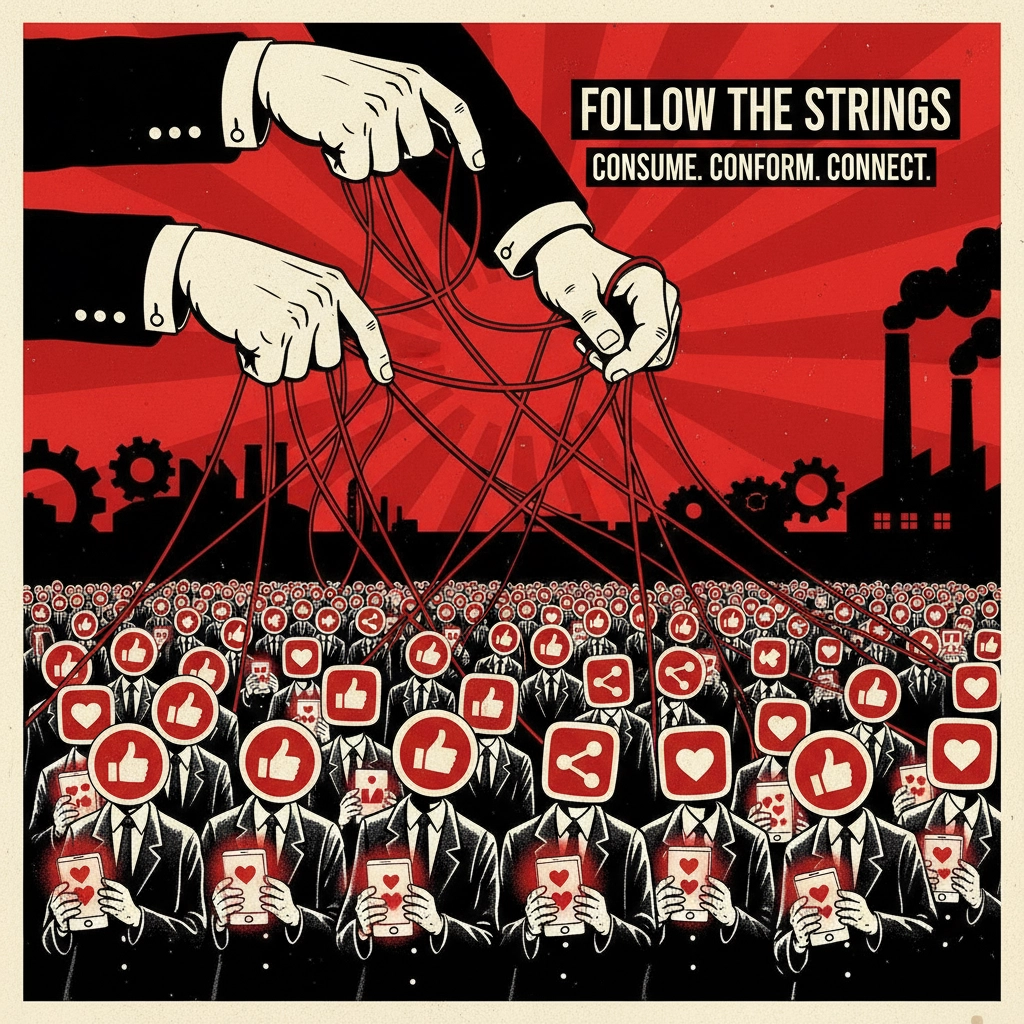
Understand algorithmic amplification. Social media platforms profit from engagement, not accuracy. Content that generates comments, shares, and reactions gets promoted regardless of truthfulness. The most viral information is often the most misleading because it provokes the strongest emotional responses.
Identify astroturfing campaigns. Astroturfing creates fake grassroots movements using coordinated networks of fake accounts. When you see identical talking points spreading rapidly across multiple platforms with slight variations, you're witnessing manufactured consensus.
5. Building Your Personal Intelligence Network
Effective fact-checking requires developing ongoing relationships with reliable sources rather than sporadic verification attempts.
Cultivate diverse source networks. Follow journalists, researchers, and experts across the political spectrum who have track records of accuracy. Include international sources to escape American media bubble effects. Subscribe to industry publications and academic journals in areas you care about.
Develop subject matter expertise. Choose 3-5 topics that matter most to you and learn enough to evaluate claims independently. Whether it's climate science, economics, or foreign policy, deep knowledge in specific areas helps you recognize manipulation attempts.
Create information verification workflows. Establish standard procedures for checking important claims before accepting them. This might include searching multiple databases, consulting expert sources, or waiting 24 hours for additional reporting before forming opinions.
6. The Counter-Intelligence Mindset
Approach all information as potentially compromised until proven otherwise. This isn't paranoia: it's operational security for your mind.
Question beneficial narratives. Stories that confirm your existing beliefs deserve extra scrutiny, not less. Confirmation bias makes you vulnerable to manipulation by bad actors who understand your preferences.
Trace information back to its origins. Most "news" is recycled content passed between outlets with minimal verification. Find the original reporting and evaluate whether secondary sources are adding context or distortion.
Understand the incentive structures. Who benefits if you believe this information? What actions might you take based on this story? Financial, political, and social incentives shape information flow more than truth-seeking does.

7. Teaching Information Defense to Others
Individual media literacy isn't enough: you need to spread these skills to create collective resistance to manipulation.
Share verification methods, not just conclusions. Instead of telling people what to believe, teach them how to verify information independently. Show them the tools and techniques that led to your conclusions.
Create local information networks. Work with neighbors, family members, and community organizations to cross-check important local information. Distributed verification is more resilient than relying on distant institutions.
Document and expose manipulation attempts. When you identify fake news sites, shill influencers, or coordinated disinformation campaigns, create records and share them widely. Sunlight remains the best disinfectant for information warfare.
The system depends on your passive consumption of manufactured narratives. Every time you fact-check a claim, trace a source, or teach someone else these techniques, you're striking back at the infrastructure of deception.
Your ability to think clearly and verify information independently isn't just personal protection: it's an act of resistance against those who profit from your confusion. The truth is out there, but you have to fight for it.
The information war is real. Your mind is the battlefield. Choose your weapons wisely and never stop fighting for the ability to think freely. For more tactical guides on resisting systematic manipulation, check out our resources on building underground communities under authoritarian rule and surviving mental warfare when the state turns against you.
Stop consuming lies. Start verifying truth. The future of independent thought depends on it.
Member discussion